

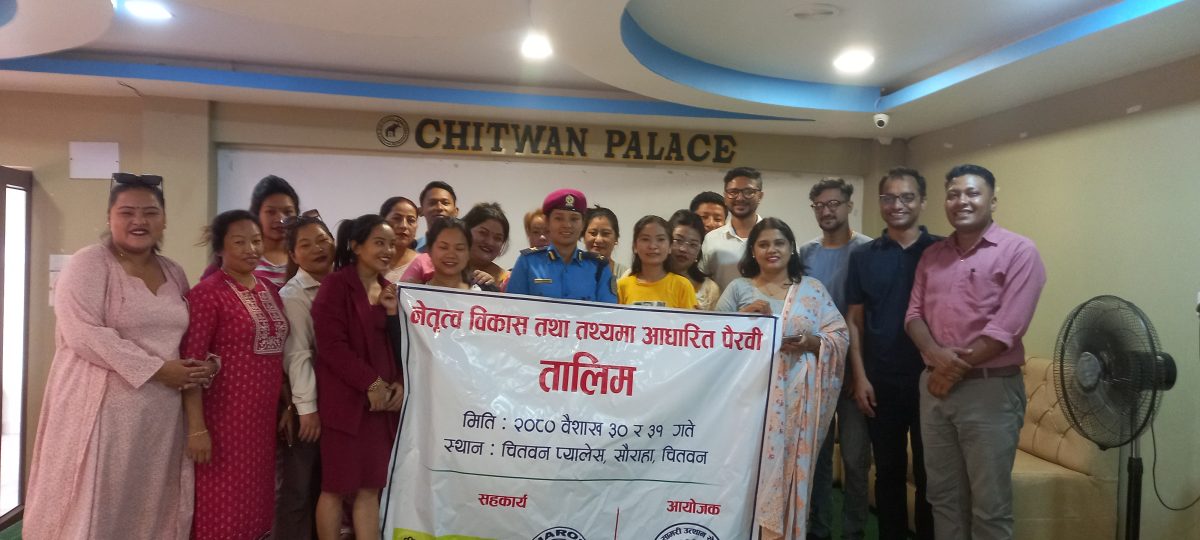
The research employed a mixed-methods approach, combining qualitative and quantitative techniques for comprehensive analysis. Quantitative data were gathered through household surveys from 420 sampled households across three social groups (Chepang, Dalit, and Tamang) in seven clusters within three municipalities. Seven trained enumerators collected data using the mobile-based KoboToolbox platform. Data cleaning and analysis utilized SPSS and Excel, with results disaggregated by variables like palika, caste/ethnicity, sex, and age to align with survey objectives.
Qualitative insights were obtained via seven focus group discussions (FGDs) involving 114 participants and 16 key informant interviews (KIIs)/in-depth interviews (IDIs) with stakeholders including elected representatives, government officials, CSO members, journalists, police, AES experts, and employers.
Quality assurance spanned questionnaire development to reporting, with triangulation of survey data against qualitative findings. Limitations included constrained resources, a short timeframe, and focus on selected social groups in specific wards and settlements of Chitwan district municipalities. Qualitative analysis was aligned with survey goals to provide holistic understanding.


Discussion about this post